Quantum Encryption vs Quantum Key Distribution: Understanding the Critical Difference
Quantum encryption and Quantum Key Distribution are often confused. One is about algorithms resistant to quantum computers, the other uses quantum physics to distribute keys. Here is the difference.
Two Different Things Called 'Quantum Encryption'
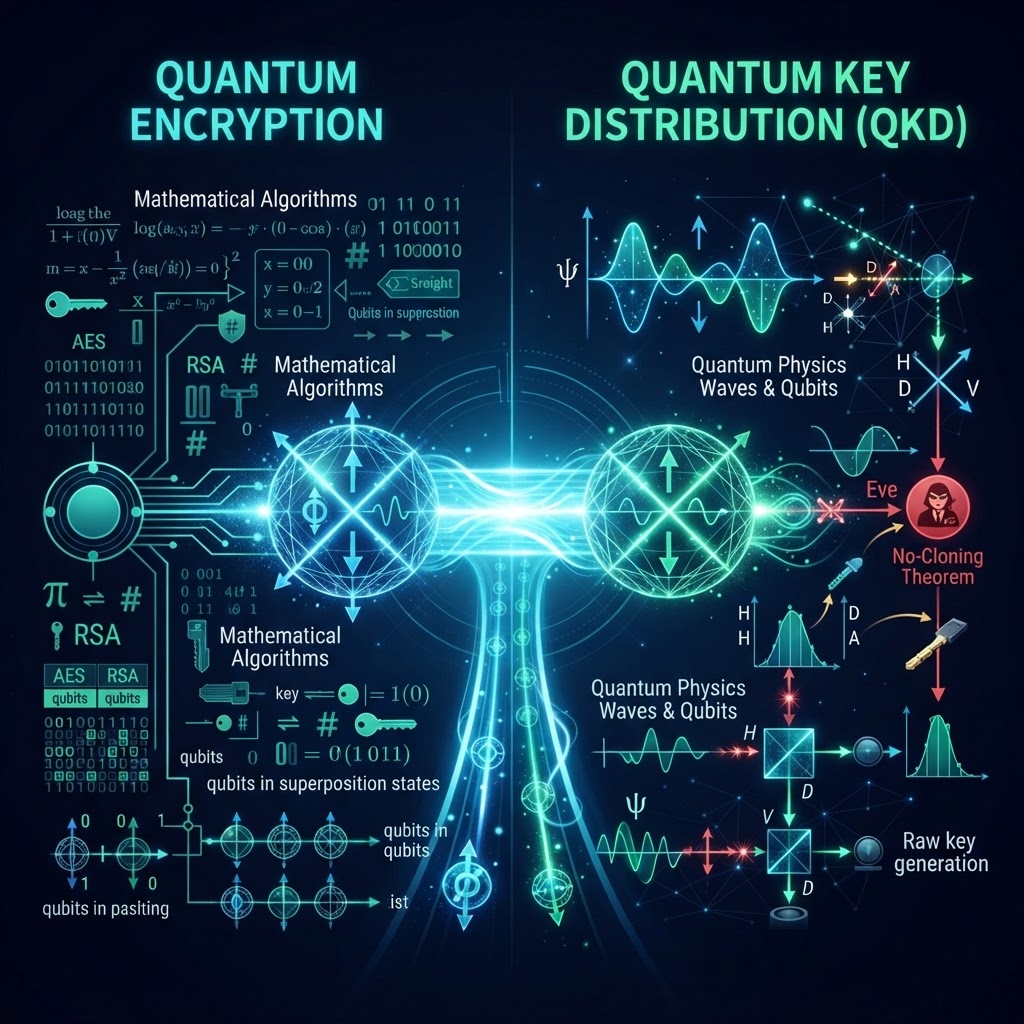
The term 'quantum encryption' is used loosely, and it often refers to two fundamentally different concepts. Understanding the distinction matters for anyone making decisions about post-quantum security, because the two approaches solve different problems with different trade-offs.
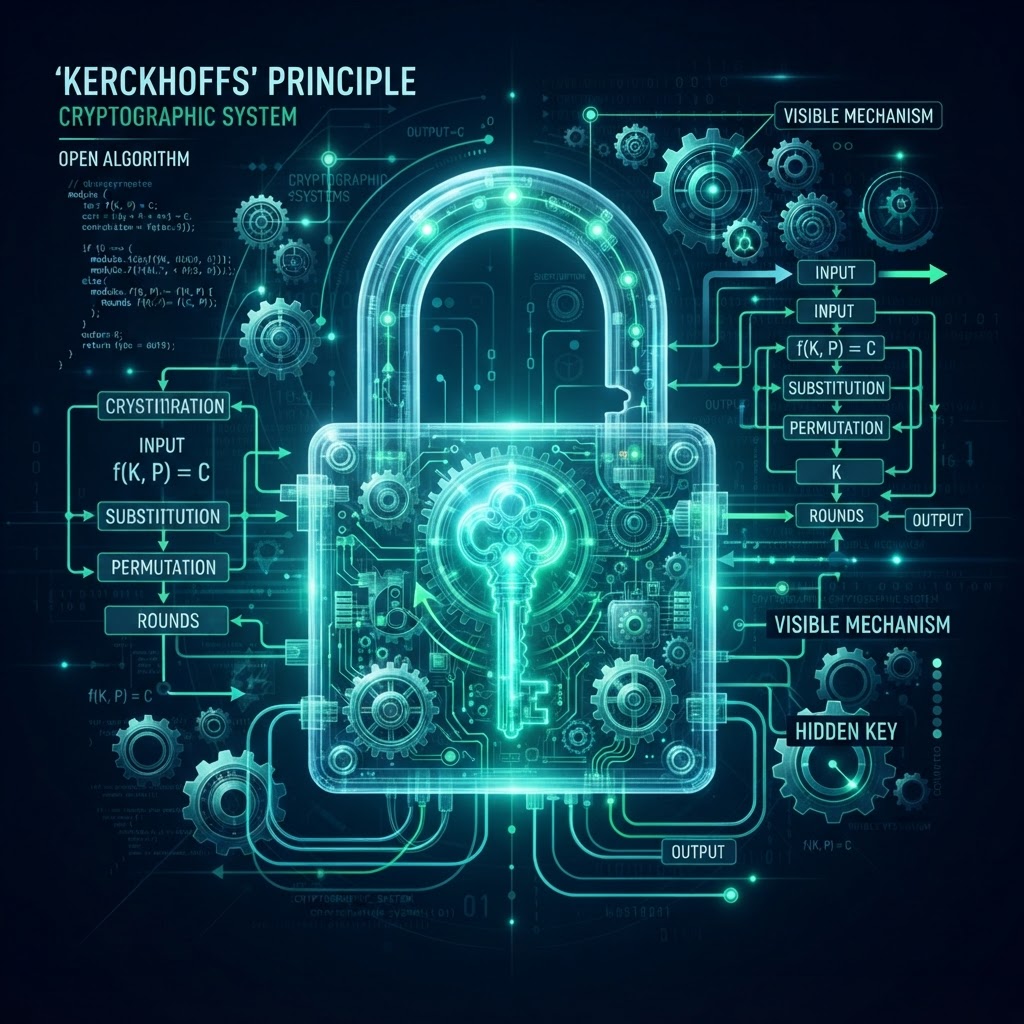
Quantum-resistant encryption (also called post-quantum cryptography) refers to classical mathematical algorithms, running on classical computers, that are believed to be secure against attacks from quantum computers. AES-256-GCM, lattice-based schemes, and hash-based signatures fall into this category. These algorithms do not use quantum physics. They use mathematics that quantum computers cannot efficiently break.
Quantum Key Distribution (QKD), by contrast, uses the principles of quantum mechanics, specifically the no-cloning theorem and observer effect, to physically transmit encryption keys between two parties. Any eavesdropping attempt disturbs the quantum states, alerting the parties to the interception. QKD requires specialized hardware, typically fiber optic connections, and is limited by distance and infrastructure cost.
Which Approach Does CryptShield Use?
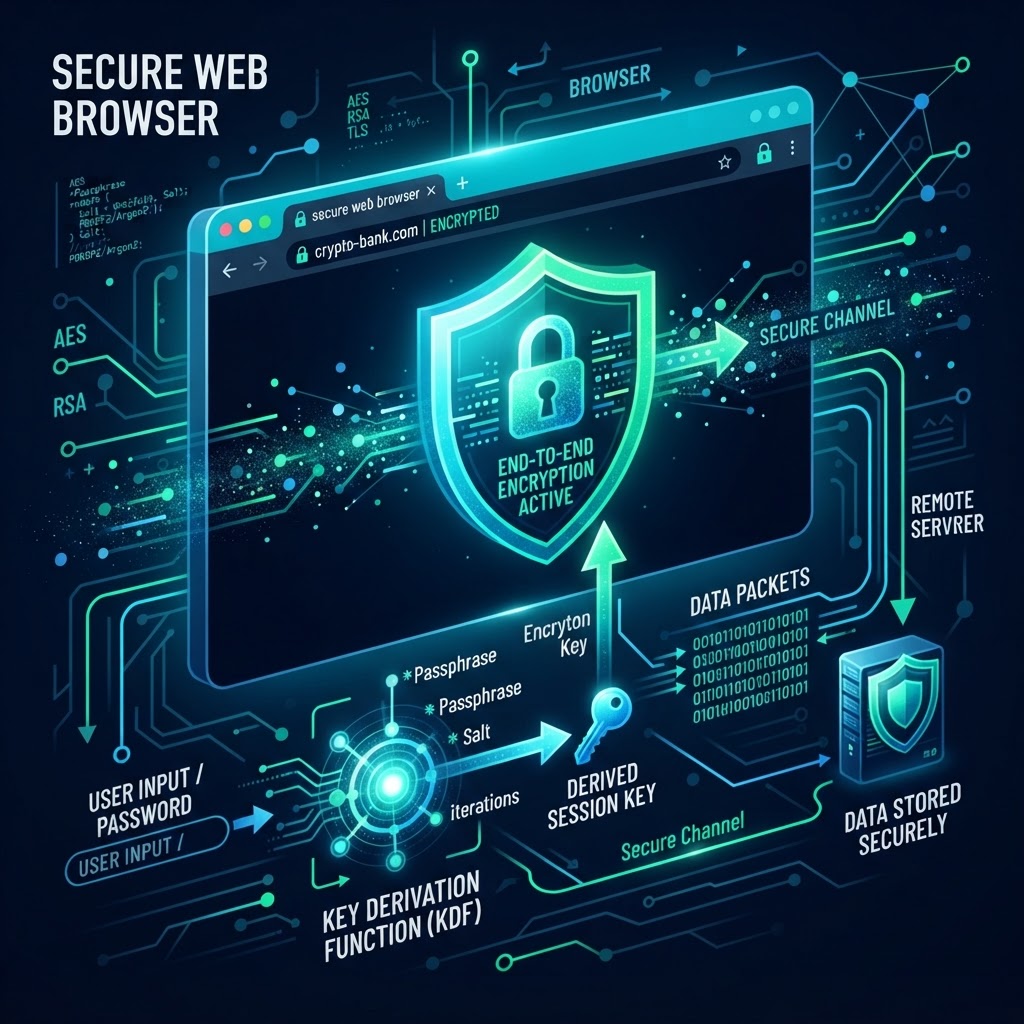
CryptShield uses quantum-resistant encryption, specifically AES-256-GCM with PBKDF2 key derivation. This is a deliberate choice for several reasons.
First, QKD requires physical infrastructure. It works over dedicated fiber optic lines with quantum-ready hardware at both ends. It is impractical for individual users encrypting files on a laptop or smartphone. Quantum-resistant encryption, by contrast, runs in any modern browser.
Second, QKD solves the key distribution problem, but it does not solve the encryption problem. Once the key is distributed, you still need a cipher to encrypt the data. QKD systems typically use AES for the actual encryption. So even with QKD, the cipher's quantum resistance is what ultimately determines the data's security.
Third, QKD is vulnerable to side-channel attacks on the physical hardware. Researchers have demonstrated attacks on QKD systems that exploit detector imperfections to extract keys without triggering the eavesdropping alarm. Quantum-resistant encryption implemented in a browser has no physical hardware to attack.
The Practical Verdict
For most real-world use cases, protecting files, cloud data, and personal communications, quantum-resistant encryption is the more practical and equally secure choice. It requires no special hardware, works on any device with a modern browser, and provides 128-bit post-quantum security. QKD remains valuable for specialized high-security scenarios, such as government and military communications over dedicated infrastructure, but it is not a practical solution for the data most people need to protect.
Key Takeaways
- Quantum-resistant encryption uses classical algorithms that quantum computers cannot break. QKD uses quantum physics to distribute keys.
- QKD requires specialized hardware and infrastructure; quantum-resistant encryption runs in any browser.
- Even QKD systems use AES for the actual encryption, making the cipher's quantum resistance the ultimate security guarantee.
- CryptShield uses AES-256-GCM because it provides practical, hardware-free, post-quantum security.
Protect your data with quantum-resistant encryption
Encrypt files and text in your browser with AES-256-GCM — zero servers, zero knowledge.
Try CryptShield Now