Quantum Encryption for Mobile Devices: Protecting Data on Compromised Smartphones
Smartphones are prime targets for spyware and forensic tools. Quantum-resistant encryption ensures that even on a compromised device, your files remain unreadable.
The Mobile Device Security Crisis
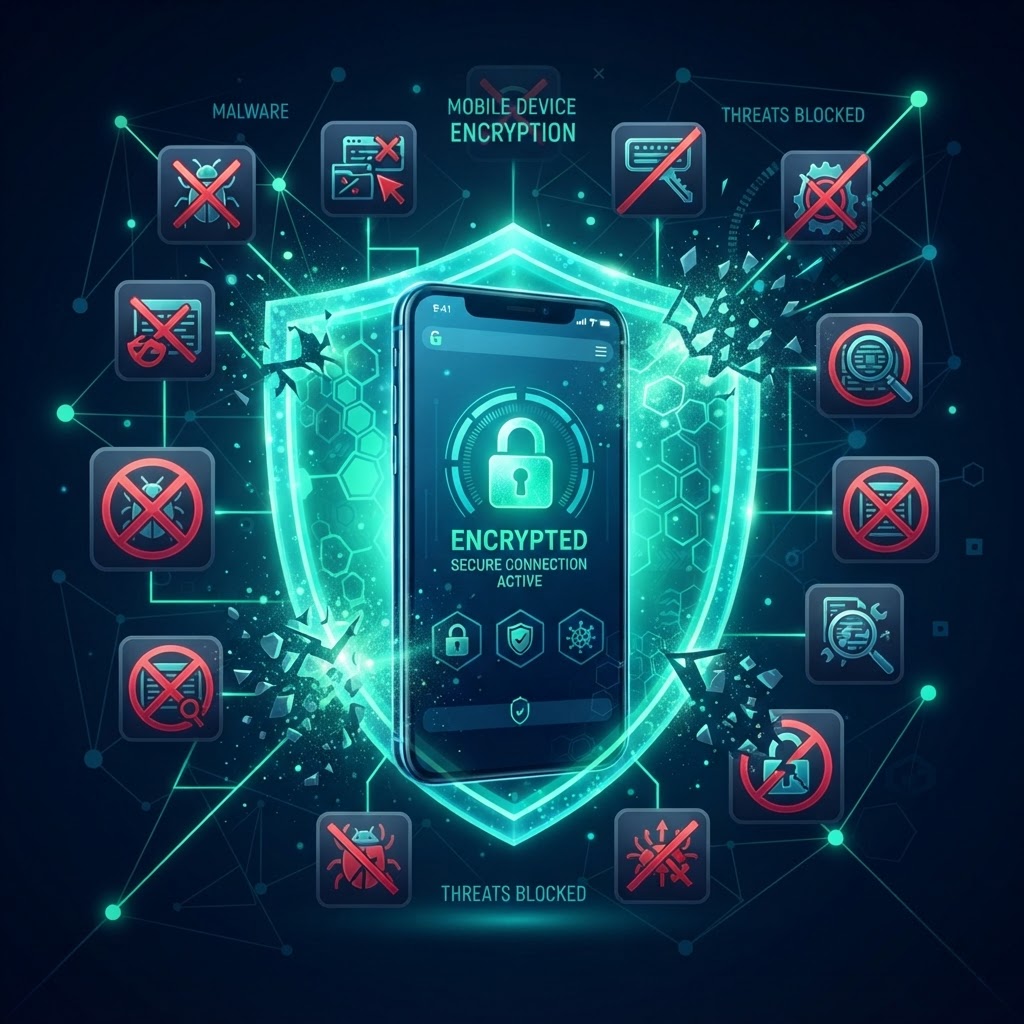
Smartphones are the most personal computers we own, and they are also the most vulnerable. They are carried everywhere, connected to public networks, and loaded with sensitive data. They are prime targets for spyware, physical seizure, and forensic extraction.
The threat landscape for mobile devices includes:
- Spyware and stalkerware: Commercial spyware, such as Pegasus and its peers, can remotely compromise a smartphone without any user interaction. Once installed, it can access files, messages, photos, and location data.
- Physical seizure: If a device is lost, stolen, or confiscated, the new possessor can use forensic tools to extract stored data, including deleted files.
- Cloud backup interception: Data synced to cloud services can be intercepted or subpoenaed, exposing files that the user believed were private.
- Supply chain attacks: Pre-installed malware on new devices can compromise data before the user takes any action.
Why Standard Mobile Encryption Is Not Enough
Modern smartphones encrypt their storage by default, using keys derived from the device PIN or biometric data. This protects against casual access, but it has critical weaknesses:
- The encryption key is stored on the device, in a secure enclave that can be bypassed by forensic tools.
- Law enforcement agencies use specialized hardware to extract keys from seized devices.
- Spyware that compromises the operating system can access data before it is encrypted or after it is decrypted.
- Cloud backups may use keys controlled by the provider, not the user.
The fundamental problem is that the encryption key lives on the device. If the device is compromised, the key is compromised, and the encryption fails.
How Quantum Encryption Changes the Mobile Threat Model
Quantum-resistant encryption with a user-controlled passphrase changes the threat model fundamentally. When a file is encrypted with AES-256-GCM using a passphrase that exists only in the user's memory, the security no longer depends on the device.
Consider the three threat categories:
Anti-Spyware: If spyware steals an encrypted file from a compromised smartphone, it gets ciphertext. The spyware cannot read it, cannot forward it for decryption, and cannot brute-force the passphrase. The file passes through the compromised device safely.
Anti-Digital Forensic Analysis: If the smartphone is seized and subjected to forensic extraction, the encrypted files are recovered as ciphertext. The forensic tools can see that the files exist, but they cannot read them. The encryption outlives the device because the key never lived on the device.
Anti-Ransomware: If an attacker exfiltrates encrypted files from a mobile device and threatens to publish them, the threat is empty. The attacker has ciphertext, not data, and cannot convert one to the other.
How CryptShield Works on Mobile
CryptShield runs in the mobile browser, using the Web Crypto API that is built into Safari on iOS and Chrome on Android. The encryption happens entirely on the device, in the browser's sandbox, without any app installation. The user opens the page, selects a file, enters a passphrase, and the file is encrypted locally.
The encrypted file can then be saved to the device, uploaded to cloud storage, or shared through any channel. The passphrase never leaves the user's memory. There is no app to detect, no key stored on the device, and no server that holds the data.
For maximum security, the user can open the page, switch to airplane mode, encrypt the files, and then clear the session. The encryption works offline, and the session clearing removes any traces from the browser.
Key Takeaways
- Mobile devices face spyware, forensic extraction, and cloud interception threats that standard device encryption does not fully address.
- When encryption keys live on the device, device compromise means key compromise, and encryption fails.
- Passphrase-based AES-256-GCM encryption decouples security from the device: the key exists only in the user's memory.
- CryptShield runs in the mobile browser, encrypts files locally, and works offline, providing quantum-resistant protection without any app installation.
Protect your data with quantum-resistant encryption
Encrypt files and text in your browser with AES-256-GCM — zero servers, zero knowledge.
Try CryptShield Now