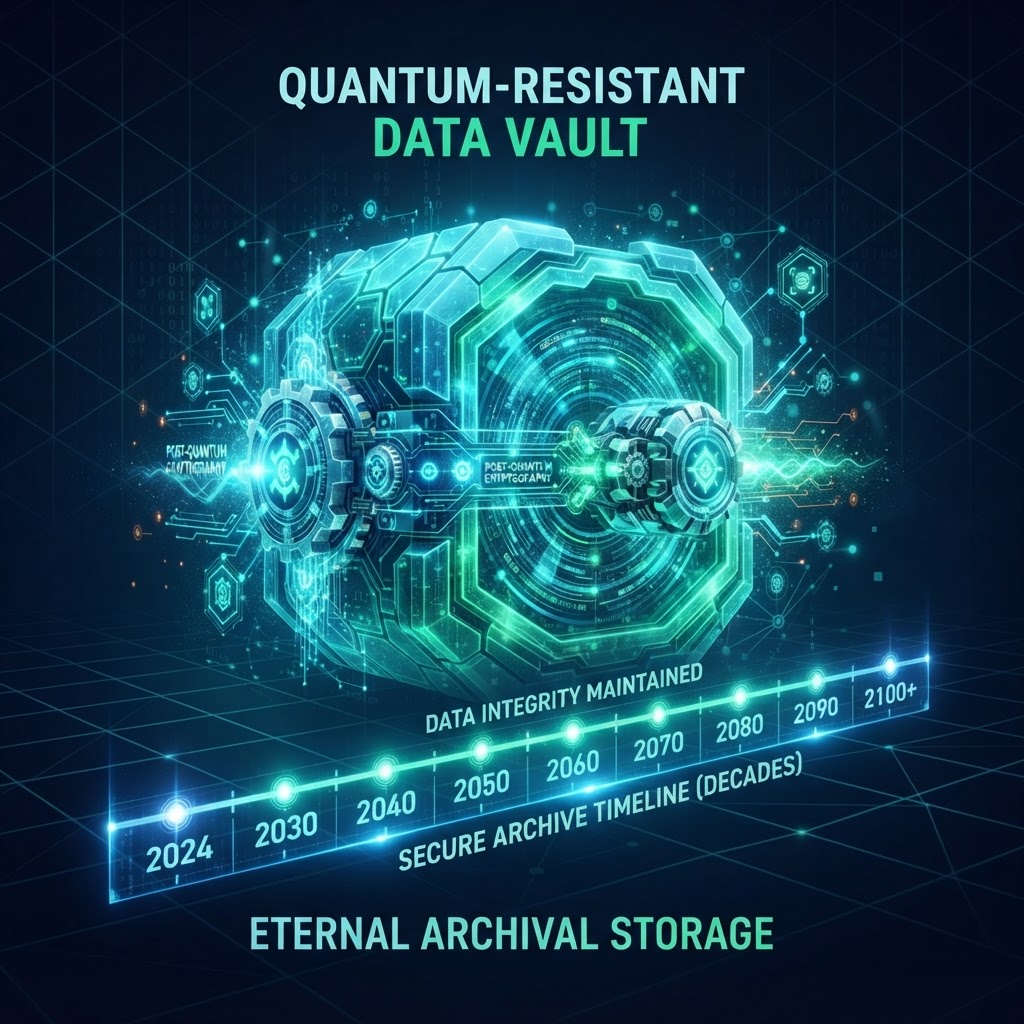
Quantum Encryption for Cloud Storage: Protecting Server Data in the Post-Quantum Era
Cloud storage is vulnerable to Store-Now-Decrypt-Later attacks. Quantum encryption with AES-256-GCM ensures your server and cloud data remains unreadable even to future quantum computers.
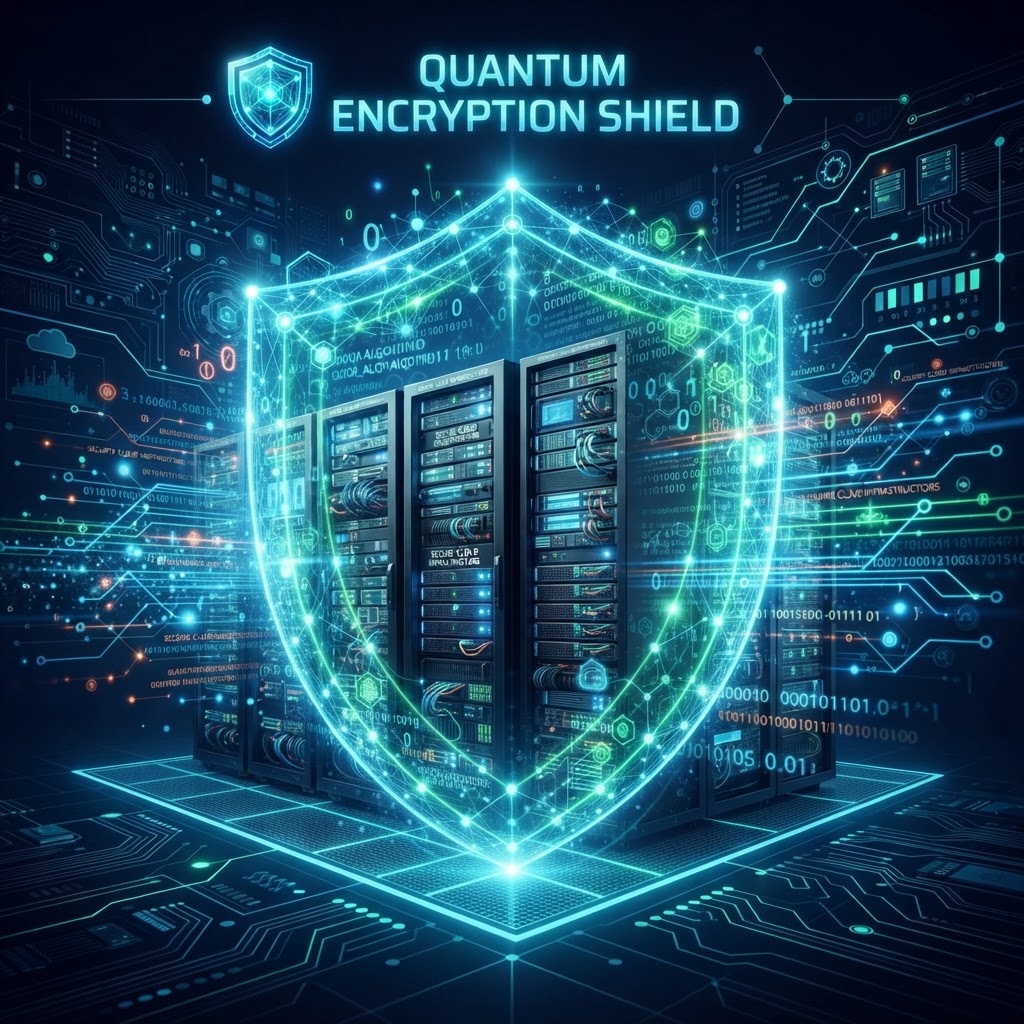
What Is Quantum Encryption for Cloud Storage?
Quantum encryption for cloud storage refers to the practice of encrypting data with algorithms that remain secure against both classical and quantum computer attacks before that data ever reaches a cloud provider. The goal is straightforward: if an adversary harvests your encrypted files from a cloud server today, they should not be able to decrypt them even if they acquire a cryptographically relevant quantum computer ten or twenty years from now.
This matters because of the Store-Now-Decrypt-Later (SNDL) threat. State-sponsored actors and criminal syndicates are already exfiltrating encrypted data from cloud platforms, banking on the assumption that future quantum hardware will eventually break the encryption. For data with a long shelf life, medical records, intellectual property, classified communications, this is not a hypothetical risk. It is an active, ongoing attack.
Why AES-256-GCM Is the Right Tool for Cloud Data
The critical distinction is between symmetric and asymmetric encryption. RSA and ECC, the public-key algorithms that protect most cloud key exchanges, are vulnerable to Shor's algorithm. A sufficiently large quantum computer could break them in hours. But AES-256-GCM, a symmetric cipher, faces only Grover's algorithm, which provides a quadratic speedup that reduces AES-256's effective security from 256 bits to 128 bits.
A 128-bit security level means an attacker needs approximately 2^128 operations to brute-force the key. That number is roughly 3.4 x 10^38, a figure so large that no projected quantum hardware, not even in optimistic estimates, could complete it within the lifetime of the universe.
How CryptShield Implements Cloud-Ready Quantum Encryption
CryptShield encrypts files entirely in the browser using the Web Crypto API before they are uploaded to any cloud platform. The passphrase never leaves the user's device. The key derivation uses PBKDF2 with hundreds of thousands of iterations, making brute-force attacks computationally infeasible even with quantum acceleration.
Because the encryption happens client-side, the cloud provider, whether it is AWS, Google Cloud, Azure, or a private server, only ever stores ciphertext. Even if the provider is breached, even if a government subpoenas the data, the files remain unreadable without the passphrase.
Key Takeaways
- Cloud-stored data faces Store-Now-Decrypt-Later attacks from actors betting on future quantum hardware.
- AES-256-GCM retains 128-bit post-quantum security, far beyond any projected quantum computer's reach.
- Client-side encryption ensures the cloud provider never holds the key, eliminating server-side attack surfaces.
- CryptShield encrypts files in the browser before upload, making cloud storage quantum-safe by design.
Protect your data with quantum-resistant encryption
Encrypt files and text in your browser with AES-256-GCM — zero servers, zero knowledge.
Try CryptShield Now