Quantum-Safe Data Exfiltration Defense: When Cybersecurity Tools Fail, Encryption Wins
AI-powered attacks bypass traditional cybersecurity defenses. Quantum-safe encryption is the last line of defense: even if data is exfiltrated, it cannot be read.
The Failure of Perimeter Defense
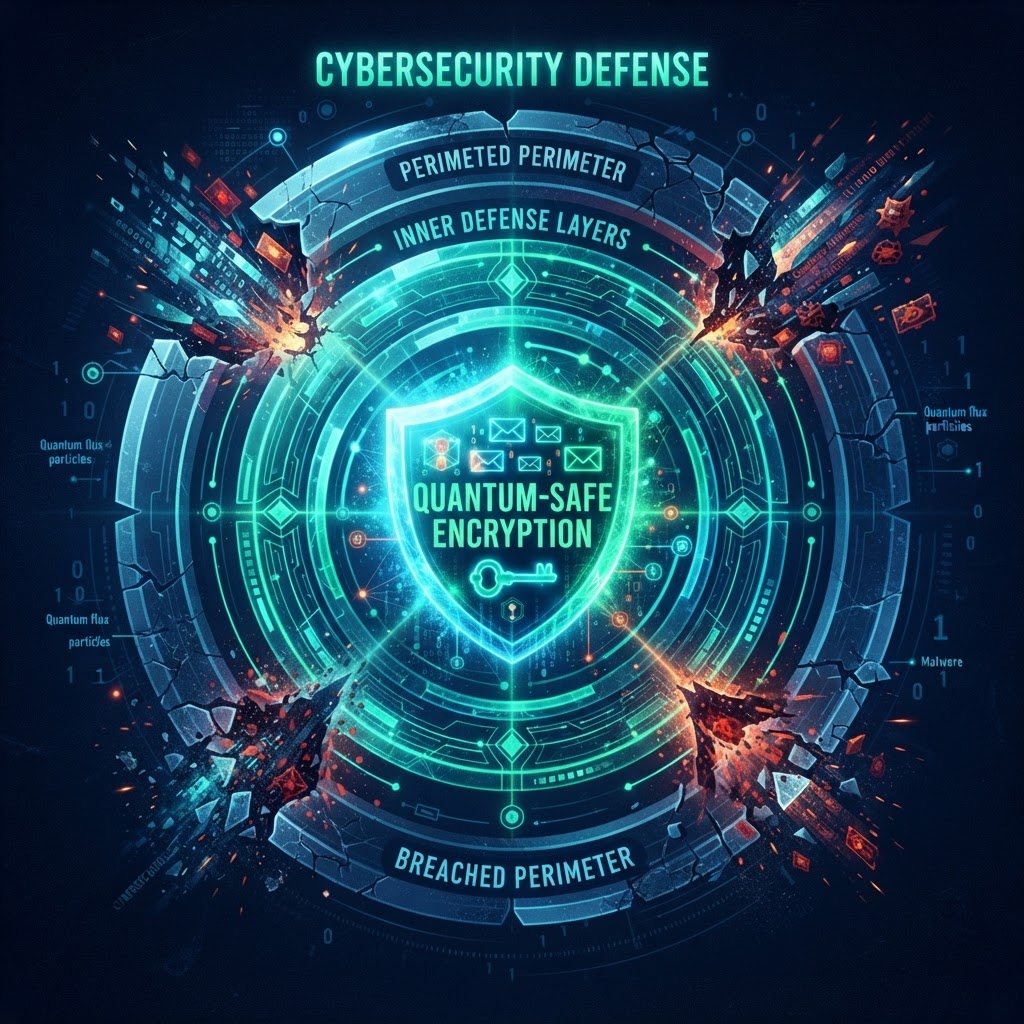
The cybersecurity industry has spent decades building perimeter defenses: firewalls, intrusion detection systems, endpoint protection platforms, and AI-powered threat hunting. These tools are necessary, but they are not sufficient. The reality is that determined attackers, whether state-sponsored APT groups or AI-automated campaigns, eventually breach perimeter defenses.
The statistics are sobering. The average time to detect a breach is over 200 days. By the time an organization discovers an intrusion, the data has already been exfiltrated. The attack has already succeeded. The question is not whether the attacker got in, but what they took with them when they left.
This is where quantum-safe encryption changes the outcome. If the data was encrypted with AES-256-GCM before it was stored, the attacker's exfiltration yields nothing but unreadable ciphertext. The breach still happened, but the data is worthless.
The Three-Layer Defense Model
A robust data protection strategy has three layers, and encryption is the one that cannot fail:
-
Prevention (probabilistic): Firewalls, EDR, and access controls reduce the probability of a breach. They do not eliminate it. This layer fails when the attacker is sufficiently sophisticated or persistent.
-
Detection (reactive): SIEM systems, anomaly detection, and threat hunting identify breaches after they occur. This layer is valuable for response, but it does not prevent data loss. By the time detection triggers, the data is often already gone.
-
Encryption (deterministic): Pre-encryption of data at rest ensures that even if prevention and detection both fail, the exfiltrated data is mathematically unreadable. This layer does not depend on detecting the attack. It depends on the laws of mathematics.
Only the third layer provides a deterministic guarantee. The first two are probabilistic defenses that can be, and regularly are, bypassed.
Why AES-256-GCM Is the Right Encryption Layer
For the encryption layer to hold against future quantum attacks, it must use a quantum-resistant algorithm. AES-256-GCM is the strongest practical choice because:
- It retains 128-bit security against Grover's algorithm, requiring 2^128 quantum operations to break.
- It is a NIST-approved standard, implemented in every modern browser through the Web Crypto API.
- It provides authenticated encryption, meaning tampering with the ciphertext is detectable.
- It works with PBKDF2 key derivation, allowing passphrase-based encryption without key infrastructure.
The CryptShield Approach
CryptShield applies this encryption layer before data is stored or transmitted. Files are encrypted in the browser, on the user's device, before they touch any server, cloud, or network. The encrypted file can then be stored anywhere, shared through any channel, or exfiltrated by any attacker, and it remains unreadable.
This is the essence of the CryptShield philosophy: data that cannot be read is useless to cyber criminals, spyware operators, and digital forensic tools. You cannot prevent every breach, but you can ensure that a breach yields nothing of value.
Key Takeaways
- Perimeter defenses and detection systems are probabilistic; they can and do fail against sophisticated attacks.
- Pre-encryption is a deterministic defense: even if the breach succeeds, the data is mathematically unreadable.
- AES-256-GCM provides 128-bit post-quantum security, making exfiltrated files useless to quantum-era attackers.
- CryptShield encrypts data before it reaches any server, ensuring the encryption layer holds regardless of breach outcome.
Protect your data with quantum-resistant encryption
Encrypt files and text in your browser with AES-256-GCM — zero servers, zero knowledge.
Try CryptShield Now